
Receive
Accept infrastructure events through SMTP, HTTP, and Redfish.
Nowlert Community Edition · Free and open source
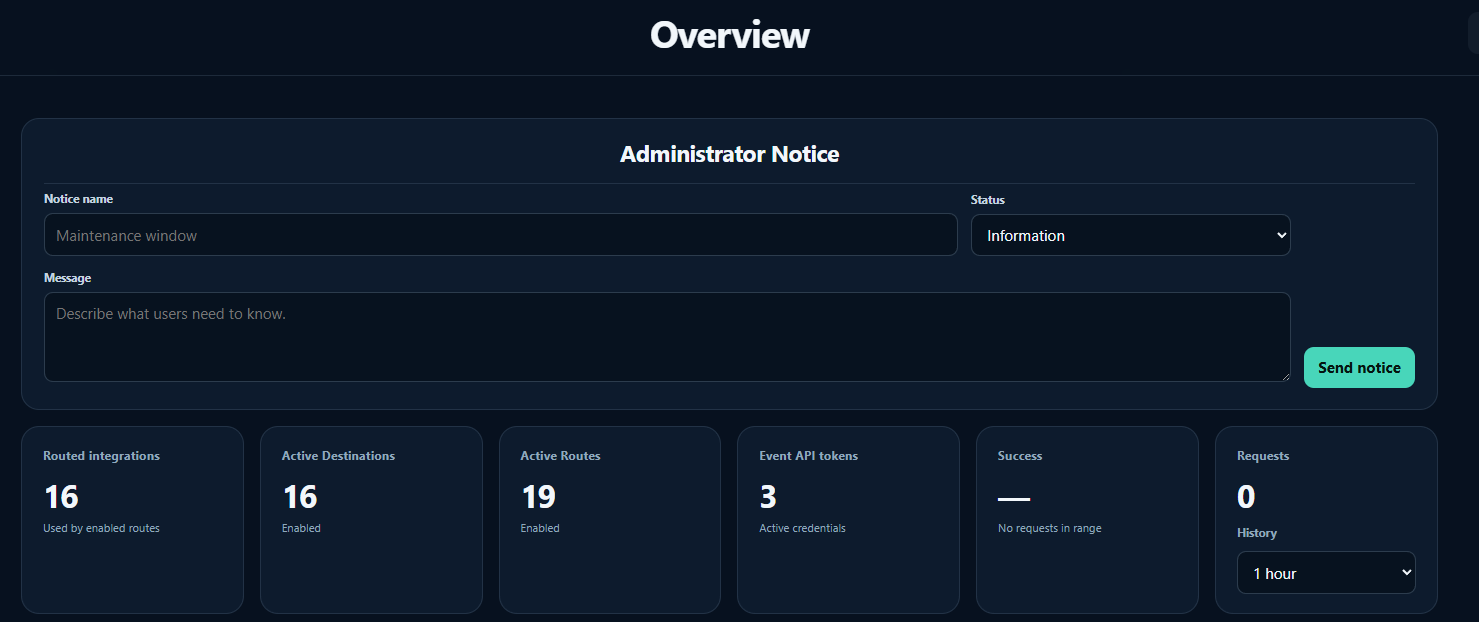
Nowlert Community Edition is the free, open-source and self-hosted core of Nowlert, available now for teams that want to operate and extend their own notification infrastructure.
GitHub · MIT License
The public repository includes the application, Docker deployment, WebUI, documentation, tests, and release history under the MIT License.
Architecture
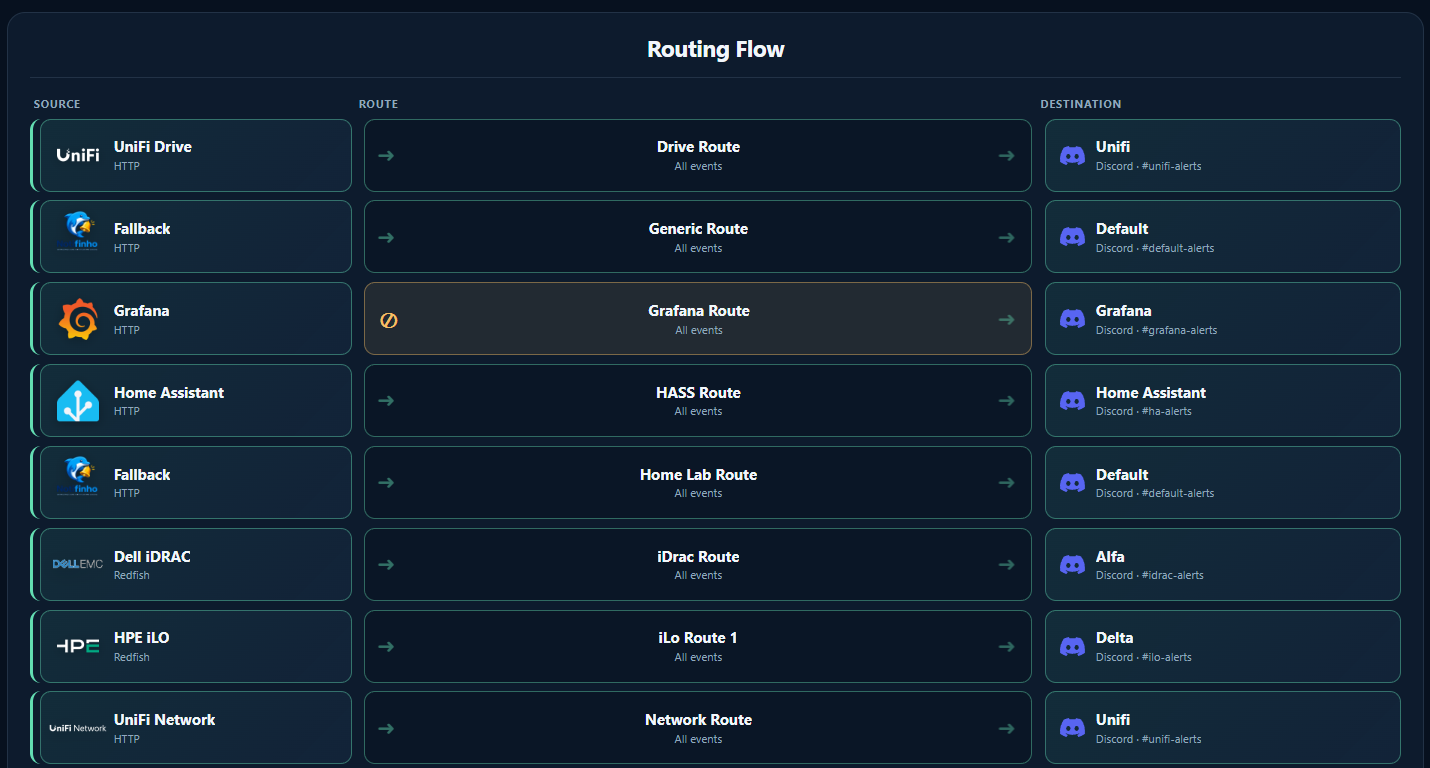
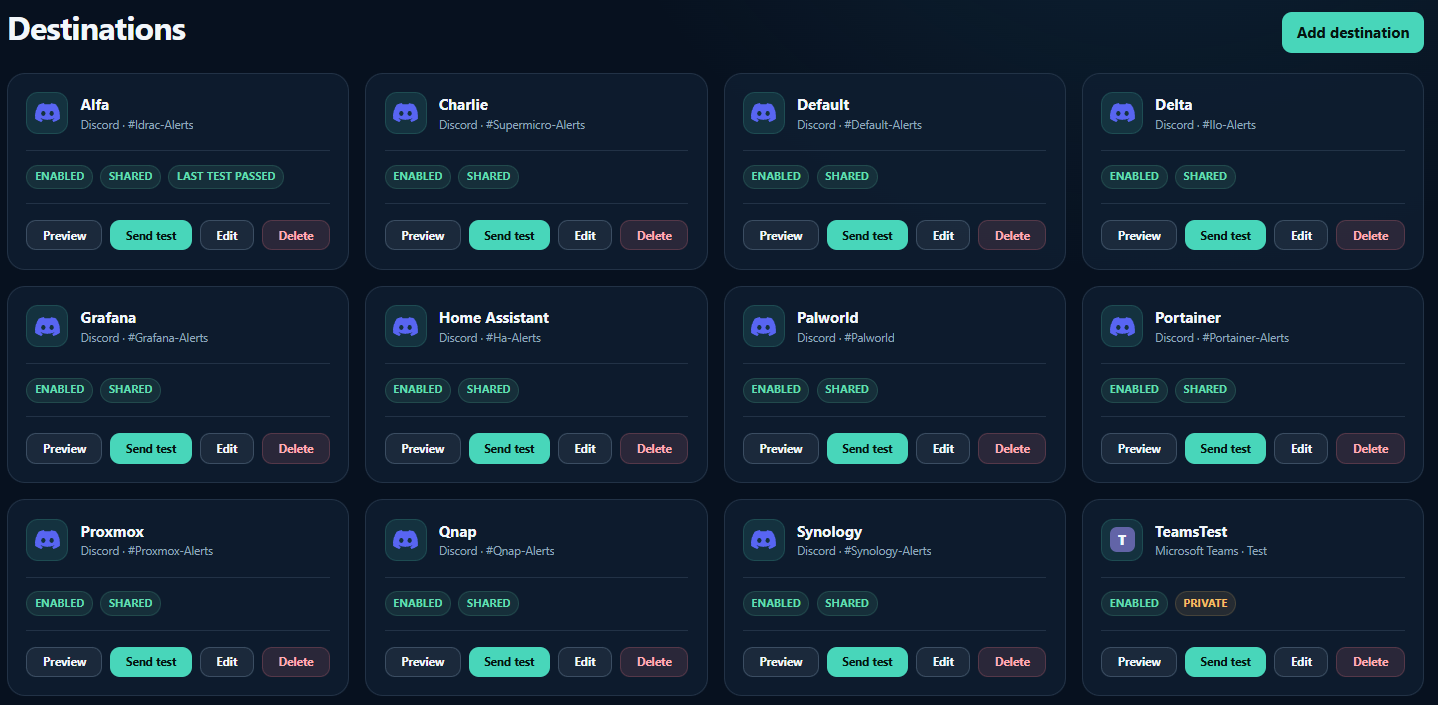
Nowlert separates input transports, source detection, parsers, routing, formatters, and destinations so that integrations can evolve without rewriting the whole delivery path.
Accept infrastructure events through SMTP, HTTP, and Redfish.
Convert vendor-specific payloads into one shared event model.
Apply deterministic routes, priorities, and filters.
Send structured notifications to configured destinations.
WebUI · Docker · API
REAL EVENTS · LIVE ENVIRONMENTS · QA MOCKS
Nowlert Community Edition is implemented and used with real-time events across multiple live operational networks. Its routes, integrations, destinations, delivery workflows and operator interfaces have been exercised with real systems and real event traffic.
Mocks are used as part of the QA process for repeatable fault testing, vendor simulation and scenarios where producing a real hardware or infrastructure failure would be unsafe or disruptive. They complement real integration testing; they do not replace it.
The code, documentation, issues, releases, and contribution workflow are public on GitHub.